Choosing skincare products can feel overwhelming, especially when you see ingredients like niacinamide, retinol, hyaluronic acid, and salicylic acid on every label. But understanding what these ingredients actually do can help you build a routine that suits your skin.
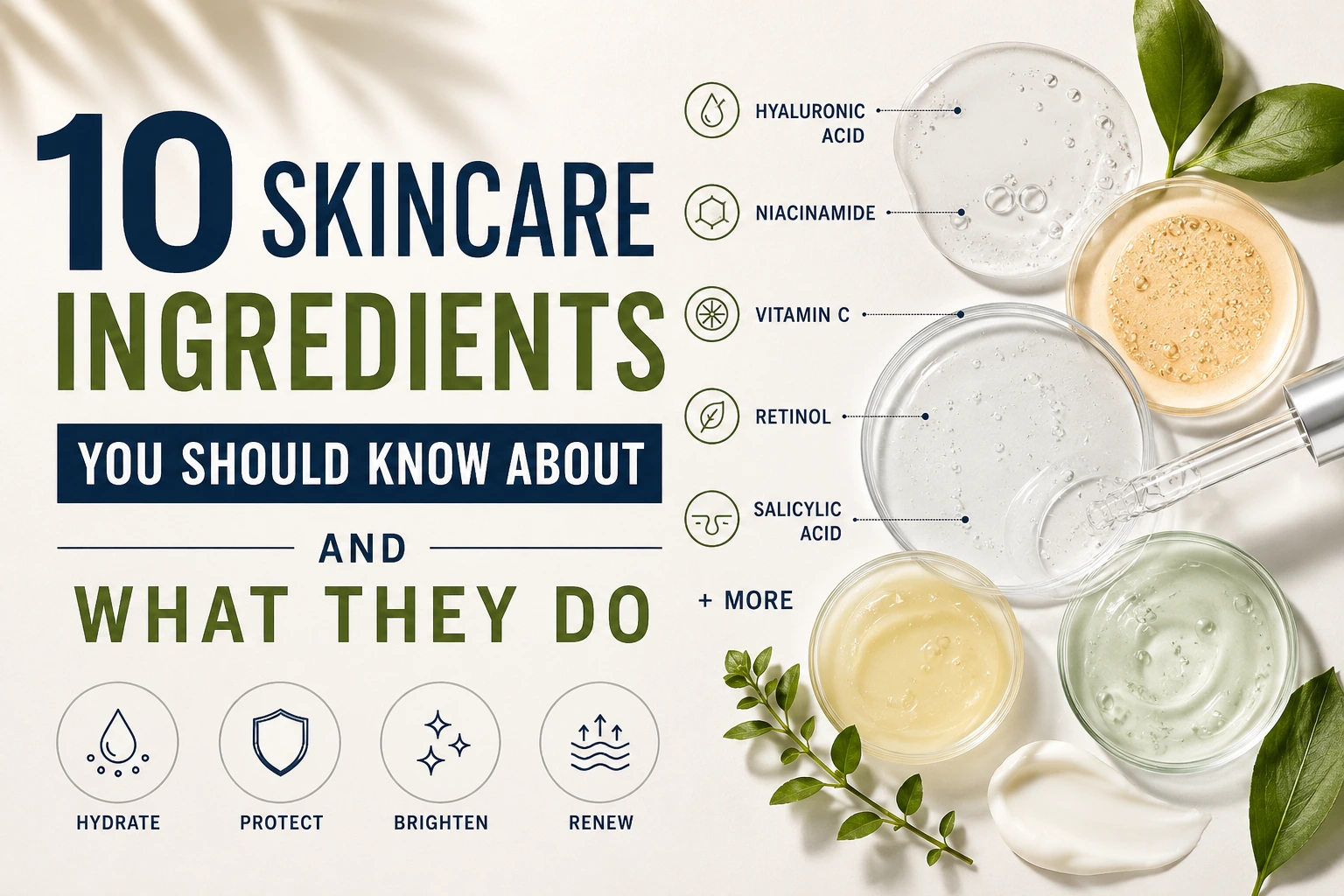
Here are 10 popular skincare ingredients you should know about and how they can benefit your skin.
1. Hyaluronic Acid — For Hydration
Hyaluronic acid is a powerful humectant that helps attract and hold water in the skin. It can make skin feel softer, smoother, and more hydrated.
Best for: Dry, dehydrated, and normal skin.
What it does:
- Helps increase skin hydration
- Reduces the feeling of dryness
- Gives skin a plumper, smoother appearance
Tip: Apply a hydrating product to slightly damp skin and follow with a moisturizer.
2. Niacinamide — For Oil Control and Skin Barrier Support
Niacinamide, also known as vitamin B3, is a versatile ingredient used in many skincare products. It can help support the skin barrier and improve the appearance of uneven skin tone and excess oil.
Best for: Oily, combination, and sensitive skin.
What it does:
- Helps control excess oil
- Supports the skin barrier
- Improves the appearance of uneven skin tone
- Can make pores appear less noticeable
3. Vitamin C — For Brightening
Vitamin C is an antioxidant that helps protect skin from environmental stressors. It is also widely used in skincare products designed to improve dullness and uneven-looking skin.
Best for: Dull or uneven-looking skin.
What it does:
- Helps brighten the appearance of skin
- Supports a more even-looking complexion
- Provides antioxidant protection
- Supports collagen production
Tip: Vitamin C is commonly used in morning routines, followed by sunscreen.
4. Retinol — For Fine Lines and Skin Renewal
Retinol is a form of vitamin A and one of the most researched ingredients in skincare. It encourages skin cell turnover and can help improve the appearance of fine lines, uneven texture, and blemishes.
Best for: Mature, acne-prone, or uneven-textured skin.
What it does:
- Improves the appearance of fine lines
- Helps smooth uneven texture
- Can help with clogged pores
- Supports skin renewal
Tip: Start slowly, such as a few nights per week, because retinol can cause irritation when introduced too quickly. Sunscreen during the day is especially important.
5. Salicylic Acid — For Clogged Pores
Salicylic acid is a beta hydroxy acid (BHA) that can penetrate into oily pores. It is particularly useful for people dealing with blackheads, whiteheads, and excess oil.
Best for: Oily and acne-prone skin.
What it does:
- Helps remove dead skin cells
- Helps unclog pores
- Can reduce the appearance of blackheads
- Helps manage excess oil
6. Glycolic Acid — For Exfoliation
Glycolic acid is an alpha hydroxy acid (AHA) that exfoliates the skin’s surface. It can help improve the appearance of dullness, uneven texture, and discoloration.
Best for: Dull or uneven-textured skin.
What it does:
- Removes dead skin cells from the surface
- Helps improve skin texture
- Can make skin appear brighter
- Supports smoother-looking skin
Tip: Over-exfoliating can irritate your skin, so use it carefully and avoid combining too many strong exfoliating products at once.
7. Ceramides — For the Skin Barrier
Ceramides are lipids naturally found in the skin. They help maintain the skin barrier and reduce moisture loss.
Best for: Dry, sensitive, or barrier-compromised skin.
What they do:
- Support the skin barrier
- Help retain moisture
- Reduce the feeling of dryness
- Help keep skin feeling comfortable
Ceramide-based moisturizers can be especially useful when your skin feels dry or tight.
8. Peptides — For Firm-Looking Skin
Peptides are short chains of amino acids that are used in skincare formulations to support the skin’s natural processes. They are commonly found in products targeting the appearance of aging skin.
Best for: Mature or tired-looking skin.
What they do:
- Support the appearance of firmer skin
- Help improve the look of fine lines
- Support healthy-looking skin
Peptides are generally considered a gentle addition to many skincare routines.
9. Azelaic Acid — For Uneven Tone and Blemishes
Azelaic acid is a naturally occurring acid used in skincare to address blemishes and uneven-looking skin. It also has soothing properties.
Best for: Acne-prone and uneven-looking skin.
What it does:
- Helps improve the appearance of blemishes
- Helps even out the look of skin tone
- Can reduce the appearance of post-blemish marks
- Has soothing properties
10. Squalane — For Moisture and Softness
Squalane is a lightweight emollient that helps soften and moisturize the skin. Unlike squalene, which occurs naturally in skin, squalane used in modern skincare is typically a more stable form.
Best for: Dry, normal, and combination skin.
What it does:
- Helps soften the skin
- Supports moisture retention
- Gives skin a smooth feel
- Can help reduce the feeling of dryness
How to Choose the Right Ingredients for Your Skin
You don’t need to use all 10 ingredients in your routine. In fact, using too many active ingredients at once can increase the risk of irritation.
A simple approach is to identify your primary skin concern first:
| Skin Concern | Ingredients to Consider |
|---|---|
| Dryness | Hyaluronic acid, ceramides, squalane |
| Excess oil | Niacinamide, salicylic acid |
| Clogged pores | Salicylic acid |
| Dullness | Vitamin C, glycolic acid |
| Uneven-looking skin tone | Vitamin C, azelaic acid, glycolic acid |
| Fine lines | Retinol, peptides |
| Sensitive or dry skin | Ceramides, hyaluronic acid, squalane |
Final Thoughts
Skincare doesn’t have to be complicated. The key is understanding what different ingredients do and choosing products based on your skin’s needs.
Start with the basics: a gentle cleanser, moisturizer, and broad-spectrum sunscreen. Then introduce targeted ingredients gradually. Give your skin time to adjust, and remember that more active ingredients don’t necessarily mean better results.
The best skincare routine is one that is simple, consistent, and suited to your skin.